![Selling a House with a Waterlogged Crawl Space in [market_city]](https://image-cdn.carrot.com/eyJidWNrZXQiOiJwcm9kdWN0aW9uLmNhcnJvdC11cGxvYWRzLm9uY2Fycm90LmNvbSIsImtleSI6InVwbG9hZHMvc2l0ZXMvNDE2NDUvMjAyNi8wOS9TZWxsaW5nLWEtSG91c2Utd2l0aC1hLVdhdGVybG9nZ2VkLUNyYXdsLVNwYWNlLnBuZyIsImVkaXRzIjp7InJlc2l6ZSI6eyJ3aWR0aCI6MTE1Mn0sInRvRm9ybWF0Ijoid2VicCIsIndlYnAiOnsicXVhbGl0eSI6NzB9fX0=)

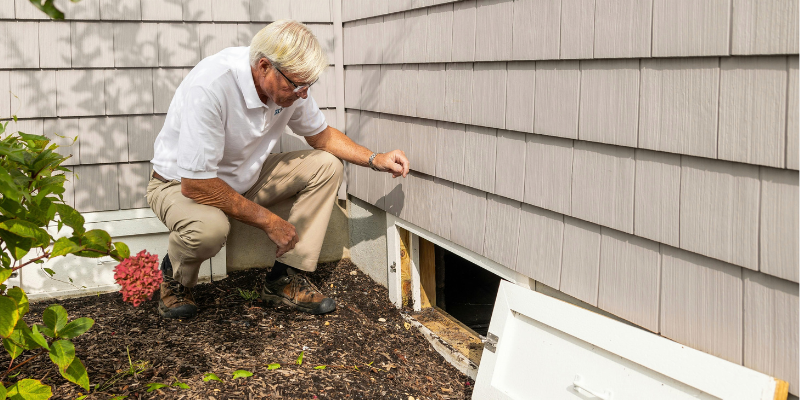
Selling a house with water in the crawl space in Florida is less common than it sounds, because most Florida houses sit on a slab, poured flat with nothing below it but sand and concrete. Drive through Seminole Heights in Tampa, Riverside in Jacksonville, or the Old Northeast in St. Pete, though, and you’ll pass block after block of pier-and-beam homes built before central air was standard. Those houses breathe from the ground up. When the ground below a crawl space stays wet, the whole property shifts with it, from the floors and the air to the appraisal and the insurance file. I’ve bought plenty of them. Water under the house seldom kills a sale. Keeping quiet about it does.
What Causes Water to Get Into a Crawl Space in Florida?
Guess wrong about the source, and you’ll pay to fix the wrong thing. Then the puddle returns with the first hard June storm. Rainwater is the usual suspect. Gutters dump right at the foundation, the yard slopes toward the house, and every storm pushes sheet flow straight under the floor. Sandy soil drains fast across much of Pasco and Hillsborough. The clay-heavy pockets inland toward Ocala hold water like a bathtub.
Rising groundwater is its own beast. In coastal Pinellas, low stretches of Lee County, and neighborhoods hugging the St. Johns, the water table sits close to the surface. After a wet week, hydrostatic pressure pushes it up into the crawl space from below. Cleaning your gutters won’t touch that.
Plumbing does quieter damage. A weeping supply line or a hairline crack in a cast iron drain can soak the soil under a 1940s bungalow for years before anyone smells a thing. HVAC condensate lines belong on this list too. I’ve opened access hatches braced for a drainage mess and found one old, forgotten condensate drain doing its patient work all cooling season.
Older codes wanted open foundation vents, and in our climate that idea runs backwards. Pull 92-degree outdoor air into a 72-degree crawl space, and water condenses on the joists and ductwork. It drips and pools with no leak and no storm. Storm surge leaves its own marks: silt lines on the piers, debris against the foundation wall, loose insulation. If your home sits in a mapped flood zone, the drainage path around the house matters more than any product a contractor wants to sell you. If storm water has already come up through the floors, here’s how to sell a house that has flooded in Florida.
If you’d rather sell without tackling the crawl space repairs first, Revival Homebuyer can make a cash offer for your Florida house as-is. You won’t have to fix the water damage or deal with the hassle of preparing the property for a traditional sale.
How Serious Is Water in a Crawl Space?
That turns almost wholly on how long it’s been there.
A puddle from last Tuesday’s storm that’s gone by Friday is upkeep. Soil that’s stayed damp for three summers is structural. The EPA is blunt about the timeline. Wet materials dried within 24 to 48 hours most often won’t grow mold, and indoor humidity belongs under 60 percent, with 30 to 50 percent as the sweet spot. A vented Florida crawl space in August laughs at that number. Months of moisture feed mold on the joists and rot in the subfloor, and they rust the ductwork and strapping.
Subterranean termites need moisture too, and a damp crawl space is an open door they seldom pass up.
Buyers feel the upstairs symptoms first. Floors go spongy near the outside walls. Doors stick, and it’s got nothing to do with the paint. The house carries a basement smell that Florida houses shouldn’t have. In a pier-and-beam home, a good share of the air you breathe rises from the space below the floor.
Insurance is where a lot of sellers get stuck. Homeowners insurance generally pays for sudden, one-time events, like a pipe that bursts on a Sunday. Gradual seepage and groundwater tend to fall outside that coverage, and flood damage needs a separate flood policy. File a claim on a slow leak that’s been building for years, and you’ll likely get a denial letter, plus a documented moisture history in your file.
If the water damage is making a traditional sale difficult, you can contact us for a cash offer on your house as-is, with no need to make the repairs first.
How to Assess Water Problems in Your Florida Crawl Space
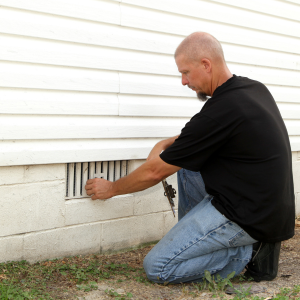
Last summer, a seller in Dunedin had an inch of water sitting under her kitchen. Six weeks later, after downspout extensions and a regraded side yard, the dirt under there was dry enough to kneel on. Before you price a thing, find out which problem you own.
Pull the hatch on a dry day, then again the morning after a heavy rain. A puddle that only shows up after storms points outward, toward grading and gutters. Water that sits there through a dry stretch points to groundwater or plumbing. Check the height of the water line on the piers, and see whether water pools on top of the vapor barrier or underneath it.
Hire a home inspector who’ll really get under the house. Skip the one who snaps a photo of the opening and writes “limited access” on the report. Ask for moisture readings on the joists and subfloor, a humidity reading in the space, and photos of the drainage path around the perimeter. Around $400 to $600 gets you a document you can hand to buyers. That report carries more weight at the table than any promise.
If you suspect mold, call a mold assessor first. Florida licenses mold assessors apart from remediators, and it generally bars an assessor from remediating a structure they assessed within the past 12 months. That keeps the person who sizes up the problem from cashing in on the cleanup. The EPA says a patch under about 10 square feet is most often a job you can handle yourself. Anything bigger, I’d hand to a pro. Once the assessor’s report is in hand, read up on how to sell a house with mold in Florida before you decide whether to remediate.
People often skip the plumbing. A plumber running a camera through the drain lines under an older Florida house costs a few hundred dollars. Now and then that camera shows your “drainage problem” is a broken sewer lateral. I’ve watched sellers price out a full waterproofing system when the real repair was eight feet of pipe. Write down everything you learn, with dates, photos, and contractor names. That folder becomes your defense later.
How Much Does It Cost to Fix Crawl Space Water in Florida?
For years I sized up these repairs off the price of the vapor barrier. I was wrong most times. The barrier is the cheap part. Stopping liquid water is what costs money, and people mix up the two scopes all the time. Encapsulation manages vapor, while waterproofing handles water you can see. A Florida crawl space with standing water needs both in most cases, with the waterproofing done first.
Angi’s 2026 cost data puts encapsulation between $5,000 and $15,000, with a national average near $5,500. The size of the space drives the price, and so does how ugly it looks when the crew shows up. Don’t accept an encapsulation estimate on a crawl space that floods. Sealing a wet space traps the problem instead of solving it.
Drainage is where the range gets wide. Angi notes that a French drain on a severe job can cost as much as the top end of a full encapsulation, and a sump pump averages about $1,100 installed. Professional mold removal in a crawl space tends to land between $1,000 and $6,000, based on how far the growth has spread. Then add regrading, downspout extensions, rotted sill plates, and sistered joists. Budgets go sideways on structural repairs under an old Florida house, because no one sees what’s rotten until the insulation comes down.
Flood zone properties add a wrinkle. FEMA rules call for vent openings in enclosed areas below the base flood elevation in a Special Flood Hazard Area, so a fully sealed crawl space may not even be allowed. Ask any contractor how their design handles flood vents. If they look lost, keep calling. For a wet Florida crawl space with mold and some rot, I budget $15,000 to $25,000. Treat that as a floor rather than a ceiling. A company that buys houses in Lakeland and the surrounding Florida cities can also be an option if the repair costs are more than you want to take on.
How to Minimize Water Issues Before Selling Your Florida Home
Spending five figures on crawl space encapsulation three weeks before you list is almost always a bad trade.
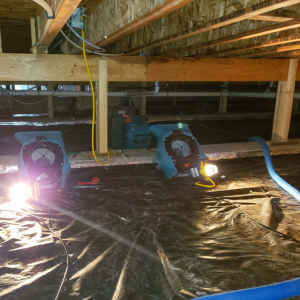
You won’t get it back, and you’ll hand the buyer an upgrade they didn’t ask for. The cheap fixes are worth doing, though, because they change what a buyer sees on the walkthrough. Extend the downspouts eight feet from the foundation and clear the gutters. Regrade the flower beds so soil falls away from the house. Have an HVAC tech check the condensate line and reroute it outside the crawl space if it’s dumping into the dirt.
Get the standing water out and get air moving under there. A rented fan and a dehumidifier running for a week will pull moisture out of the wood and knock down the smell that makes buyers flinch. The EPA’s mold guidance makes the order plain: drying comes first, and cleaning comes second.
Keep every receipt. A folder showing you fixed the drainage in March and re-measured humidity in May reads like the file of a careful owner. What I’d skip: cosmetic patching upstairs, new flooring over a subfloor you haven’t dried, and any crew that wants a deposit before handing you a written scope.
A homeowner in Lakeland called me on a Wednesday. She had a job transfer to Charlotte and five weeks to be out of the house. Her crawl space had water from a failed drain line, and the repair sat half-finished, with a pallet of vapor barrier, still wrapped, sitting in the carport where the contractor left it. Repair-and-list wasn’t going to fit the calendar. We bought it in its half-fixed condition, and she spent those five weeks packing instead of chasing contractors. Revival Homebuyer handles a fair number of sales like that one, where the deadline drives the decision more than the dollar.
Can You Sell a House with Water in the Crawl Space in Florida?
Yes, you can sell it, and you don’t have to fix it first. What you can’t do is hide it. Florida’s core disclosure rule comes from a 1985 Florida Supreme Court decision, Johnson v. Davis. It says a seller who knows of facts that materially affect the value has to disclose them when they aren’t readily visible. Water under the floor qualifies. So does mold someone has told you about. An as-is contract doesn’t erase that duty either. Florida courts treat as-is language as a limit on repair demands, not a license to stay quiet.
State law adds a written layer on top. Section 689.302 of the Florida Statutes requires a home seller to hand the buyer a flood disclosure form at or before contract signing. Since October 1, 2025, that form covers flood-related insurance claims, outside help you got to fix the damage, and any flooding you know hurt the home while you owned it. If stormwater ever reached your crawl space, that form is where it goes.
Put the disclosure in writing and attach the inspection report. Sellers who hand buyers the bad news up front rarely get sued. Owners who paint over the stains sometimes do.
Loans bring their own limits. FHA rules say a crawl space has to be free of excess moisture and pooling water, and a conventional appraiser who sees standing water or active mold will note it too. The lender then makes repairs a condition of the loan. That corners you: fix it with your own money mid-contract, or watch the sale collapse. Mortgage lending rules don’t hate old houses, but they’re hard on unresolved water.
That’s why crawl space houses so often go to Florida cash buyers and investors. No appraisal condition, and no lender is asking for a dry space before funding. We look at the repair scope, subtract it, and close. Plenty of Florida sellers pick that route for the known timeline alone.
Which path fits you depends less on the water than on how much doubt you can live with. A listed sale can net more when the buyer pool includes rehabbers paying cash. It can also sit through two failed contracts before you find that buyer.
What Is Your Florida Home Worth with Water in the Crawl Space?

“They’ll just use the water to lowball me.” Some buyers will try. The market sets guardrails, though, and right now tight supply still helps sellers.
Florida Realtors reported that the statewide single-family median sale price rose just over one percent year over year to $415,000 in August 2026, while single-family inventory fell 13 percent from a year earlier. With fewer listings, shoppers forgive condition problems faster.
Redfin’s Florida data put the median days on market at 73 in August 2026, three days faster than a year before. Tampa ran the other way, with homes taking a median of 46 days, eight days longer than the prior August. A house with a wet crawl space will lag those numbers, but it won’t sit for a year.
Buyers price it in two layers. They take the repair estimate and add a risk premium on top, because no one offers with confidence on damage they can’t fully see. That premium is the price of doubt, and it’s the strongest argument for getting a written contractor scope before you list. Paperwork shrinks it.
Picture two identical bungalows on the same street with the same water problem. One comes with an inspection report, a plumber’s camera video, and two contractor estimates, so it sells at a known discount. The other has a nervous seller saying “I think it’s just condensation,” and it gets picked apart.
Investor offers on these houses swing wildly for one reason. Each buyer is guessing at its own worst case. Give them facts, and the guesses start to converge. This is where investor home buyers in Orlando and other Florida cities may offer another option for sellers who want to avoid the traditional listing process.
Frequently Asked Questions
Do I Have to Disclose a Crawl Space Water Problem?
Yes. Florida sellers have to disclose known material defects that aren’t readily observable, and standing water under the house qualifies. Hiding it won’t make it go away. It just moves the fight to after closing, where it costs a lot more. A written disclosure backed by paperwork is the version that protects you.
Will a Buyer’s Lender Refuse the Loan Over This?
Usually it won’t refuse outright, but it’ll want repairs first. Conventional and FHA appraisers flag active water intrusion, visible mold, and structural damage to joists or subfloor. The lender then requires repairs before funding, which means the seller pays or the sale dies. That’s the biggest reason these houses stall on the MLS. Many end up selling to cash buyers anyway, just later and at a lower price.
Is It Worth Fixing Before Listing?
It depends on your timeline and your cash. If you can front the repair, wait out the weeks of work and drying, and still list into a decent window, fixing tends to pay. If you’re working around a job transfer, a probate deadline, or a mortgage you’re already behind on, the repair math stops mattering. The calendar takes over. Plenty of Hillsborough County sellers weigh that same trade, and cash home buyers in Riverview, Florida can give you an as-is number to hold against your repair budget.
If you’ve got a wet crawl space and need to move, it’s worth knowing what both paths look like before you commit to either one. Revival Homebuyer buys houses across Tampa, Lakeland, and the surrounding counties in whatever condition they’re in: water damage, half-finished repairs, contractor mess in the carport, and more. No obligation to take the offer, and no pressure if you’d rather fix it and list it. Reach out to us at (813) 548-3674 when you want the numbers.
Helpful Florida Blog Articles
- Selling a House in a Trust After Death in Florida
- Selling A Home For A Loss In Florida
- FSBO Costs in Florida
- Who Pays For Appraisal And Inspection when Buying a House
- Can You Live In A House During Probate
- Can I Sell My House if My Spouse is in Jail in Florida
- When Is It Too Late to Stop Foreclosure in Florida
- How to Take Your House Off the Market in Florida
- Can You Sell A House With Termites In Florida
- How Will Medicaid Know if I Sell My House
- Selling a House with Water in the Crawl Space in Florida