


Mud tubes along the foundation. A hollow sound when you knock on a doorframe. Tiny pellets of frass across the garage floor the morning you went in for the lawnmower. Many Florida homeowners discover they have termites just when they’re trying to sell. I’ve watched more than one closing fall apart over it.
The question I hear most is simple. Can you sell a house with termites in Florida, or does a termite problem kill the sale? It doesn’t have to. Florida buyers run into termite damage more often than you’d guess. Getting from that discovery to a closed sale takes more than wishful thinking, though. Some of the advice floating around will steer you wrong, especially from people who’ve never bought a termite-damaged house.
Yes, You Can Sell a House with Termites in Florida
You can sell a house with termites in Florida. I used to assume a termite problem put a house in its own harder category, separate from other distressed homes. Dozens of buys later, I know that’s not how it works. What matters isn’t termites versus no termites. It’s disclosed and handled right versus hidden and found later.
No law stops you from listing and selling a house with current or past termite issues. Florida law does require sellers to disclose known material defects, and termite damage qualifies. Courts here treat disclosure and concealment very differently. The sale itself is legal. Concealing is where sellers get into real trouble.
Practically speaking, you can price the house, find a buyer, and sell it. Which path you take shapes how smooth the process is: repair first, sell as-is, or work with a cash buyer. A pest problem closes off none of them. Florida Realtors put the median single-family price at $425,000 in July 2026, up 3.7% from a year earlier. Buyers are still active across Florida, and houses in rough shape still trade. A termite disclosure doesn’t make your house unsellable; it changes how you position it.
Termite problems turn up often enough here that buyers and their agents have seen this before. Most respond to a disclosed pest history by negotiating, not by walking away.
How Bad Is Florida’s Termite Problem, Really?
People hear “Florida has termites” and picture a minor regional quirk, something like the occasional palmetto bug. For homeowners trying to sell, it’s a good bit more complicated than that.
At least 20 termite species live in Florida, more than any other state, and recent research ranks it the most termite-infested state in the country. Most of the structural damage traces back to a handful of them. Native subterranean termites turn up statewide. Drywood termites live inside the wood they infest and never touch soil. Then there are the two invasive species. The Formosan is established across most of Florida’s coastal counties and major cities now, from Miami to Jacksonville to the Panhandle. Asian subterranean termites have pushed north out of South Florida as far as Tampa and Brevard County, which surprised me when I started buying up there.
Eastern subterranean termites are the most widespread in Florida. Formosans are the most destructive, partly because a single colony can hold several million insects, whereas a native colony holds hundreds of thousands. A Formosan colony can do in months what other species need years to accomplish. Sellers in Seminole Heights, Pinellas Park, or the Windermere corridor outside Orlando aren’t facing a distant threat. They’re facing one of the most aggressive wood-destroying insects in the country.
A while back, I bought a house in Dunedin from a retired couple. They’d just moved their last parent into assisted living in Clearwater, and nobody had been in the house regularly for eight months. The garage was ground zero for a subterranean colony chewing through wall framing behind the drywall. A pest inspector pulled back a piece of baseboard while we walked through. Mud tubes were stacked three inches high along the concrete block. That house looked fine from the street. In this climate, a hidden colony can develop quickly. We buy houses in Dunedin in exactly that condition.
Warm and humid nearly year-round, Florida is close to perfect termite country. Up north, activity drops off in winter. Florida termites breed all year. That matters when you price a house with suspected damage, because what’s in there rarely shrinks on its own.
Home Termite Damage in Florida
Sellers push back with a fair objection sometimes. “The house has stood for thirty years. Can’t be that bad.” Structurally, they might be right. A buyer’s lender is a different question, since lenders underwrite risk, not history.
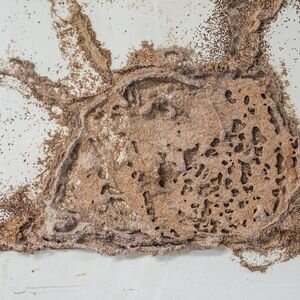
Drywood termites show up all over Florida. Their damage lands in attic framing, window frames, and interior woodwork, which makes them a real challenge for homeowners and pest control crews. Subterranean damage looks different. It usually starts at the foundation or the soil line, then works upward through wall cavities and floor systems before anything shows outside.
Termites feed behind closed walls. They can chew for years before somebody finds them during a remodel or spots a swarm in spring. That slow timeline is why sellers struggle to size up the damage at the point of sale. By the time you find frass on a windowsill, the colony isn’t new. The same goes for a swarm cloud rising off the soil on the west side of the house. Damage has been adding up long before anyone thought to look.
Buyers know this. Their inspectors know it better. Florida requires a licensed pest control operator, not just any home inspector, to issue a Wood-Destroying Organism (WDO) report. It comes on FDACS Form 13645, the only WDO form Florida recognizes for a real estate transaction. A buyer’s agent asks for that report early, and what it says sets the tone for every conversation after.
What Does Termite Damage Cost to Repair in Florida?
Sellers get their first real shock at the numbers.
Cosmetic work stays cheap by comparison, a few hundred to a couple thousand dollars. Bubbled paint, surface scarring, and buckled hardwood that hasn’t lost its structure. Once termites have worked through framing, floor joists, or roof decking, the math changes fast. Repairs to joists and wall framing generally run $5,000 to $15,000, and severe cases involving load-bearing framing or sill replacement reach $35,000 or more. Every house sits somewhere different on that range, and the honest estimate only arrives after somebody opens a wall.
Standard homeowners’ insurance almost never covers termite damage. Every major carrier treats termite damage as a preventable maintenance issue rather than a sudden loss, so the repair bill lands on you. That’s the standard policy language, whether you’re in Coral Gables, Port St. Lucie, or Tallahassee.
The bigger shock isn’t the first contractor’s number. It’s the scope creep after demolition starts. Termites eat wood from the inside out, so an inspector can only confirm what’s visible until walls and floors come open. A $9,000 repair job can double once the framing behind the drywall is exposed. That isn’t a contractor padding the offer. Weighing repairs before you list? Build the uncertainty into your math, and never treat the first estimate as your ceiling. Termites that have fed for years cost more to fix than a colony caught early, which is why an early pest inspection pays for itself in any sale.
What Florida Law Requires You to Disclose About Termite Damage
A seller in St. Petersburg called her agent, excited to list her mother’s bungalow in the Kenwood neighborhood. Two days before photos, the pre-listing pest inspection turned up active drywood termites in the attic. Her agent wanted to delay the listing and fix everything quietly. Under Florida law, that instinct runs backwards.
The state’s core disclosure rule traces back to one case, Johnson v. Davis, decided by the Florida Supreme Court in 1985. Before that ruling, Florida followed caveat emptor, which told buyers they were on their own. After it, sellers carry a duty to disclose known material defects a buyer can’t readily see. Selling as-is doesn’t erase that duty either.
Florida sellers have to disclose most material facts about the condition of the house, past and present. That covers repairs already done and repairs still needed:
- Termite damage and any other wood-destroying organism activity
- Mold and Chinese drywall
- Leaky roofs, plumbing problems, and electrical problems
- Structural damage of any kind
A fraud claim survives the deed transfer. Buyers get four years to bring one, and the clock starts on the date of discovery, not the closing date. So the notion that you close and you’re in the clear isn’t how Florida courts see it. A buyer who finds hidden termite damage a year later has a real claim, and their attorney knows exactly where to start.
Keep every treatment receipt, report, and warranty. Those papers are gold during negotiations. Buyers relax when a disclosure comes backed by treatment records. Sellers who hide a pest history almost always end up worse off than the ones who lead with it.
Why Traditional Home Sales Fall Apart with Termite Damage
So what happens to all those disclosed termite situations on the traditional market?

Buyers using mortgage financing run into problems. A buyer’s lender orders an appraisal, and appraisers flag structural pest damage in their reports. When an appraisal notes an active colony or unrepaired damage, most conventional lenders won’t fund the loan until there’s treatment and a clean WDO report. That drops the repair bill on the seller’s plate mid-transaction, usually under a deadline.
Government-backed loans are stricter. The VA requires wood-destroying organism documentation on every Florida home it backs, and an active infestation has to be treated before closing. FHA lenders order one when the appraiser sees evidence of infestation or when the practice is customary locally, which in Florida it usually is. Picture a buyer with a VA loan, someone who served at MacDill Air Force Base or NAS Jacksonville. That buyer can’t close on your house until it’s treated. You treat it, or the sale dies.
Florida Realtors put single-family supply at 4.5 months in July 2026, with closings landing 30 to 90 days past the contract date. Add a failed inspection, a lender condition requiring treatment, and re-inspection time. A termite-damaged house on the traditional market can easily sit three or four months before you see a clean offer. Every extra month costs you. Mortgage payments, insurance, and utilities don’t pause because your sale got complicated.
Should You Fix the Termite Damage or Sell the House As-Is?
Repairing before you list almost never pencils out the way sellers hope.
On paper, you spend $10,000 on repairs and add $15,000 to the sale price. Reality rarely cooperates. Buyers still know the history, still negotiate on it, and still order their own WDO inspections after you hand over a treatment warranty. A dollar spent seldom comes back as a dollar in sale price, and you carry all the scope-creep risk.
Here’s the trade in plain terms:
| What you’re taking on | Repair first, then list. | Sell the house as-is. |
|---|---|---|
| Money up front | You fund treatment and repairs. | None |
| Timeline | Contractor schedules set it. | You pick the closing date. |
| Lender risk | An appraiser or underwriter can stop the sale. | No lender in the middle |
| Scope surprises | Yours, once the walls open | The buyer’s |
| Price | Full retail, minus what buyers negotiate back | Below retail, priced for condition |
| Paperwork | Disclosure plus a clean WDO report | Disclosure |
Selling as-is doesn’t mean giving up money for nothing. You sell at a price that’s honest about the condition and let the buyer handle the termite treatment, usually a cash buyer or investor with their own repair crews. You skip weeks of contractor scheduling and the discoveries that come mid-repair. No lender can kill a sale you thought was done. For a lot of Florida sellers, as-is is the route that reaches the closing table, especially with an inherited house, out-of-state ownership, or money pressure.
One situation favors repairing first: purely cosmetic damage in an otherwise strong house in a competitive neighborhood. Say the WDO report shows surface-level drywood activity in a well-kept Hyde Park or College Park bungalow. If the repair estimate really is in the hundreds rather than the thousands, fixing it before you list probably nets you more. That case is rarer than sellers assume, and I’ve watched confident sellers learn it the hard way.
How Cash Buyers Look at Termite-Damaged Homes in Florida
Cash buyers who specialize in distressed houses price termite work into every offer they make, because they’re the ones who end up paying for it.
A cash buyer sizes up a termite-damaged house, nothing like a financed buyer does. The traditional buyer sees a lender condition and a repair obligation. To a cash buyer it’s a price to negotiate and a project to run on their timeline, with their own contractors. That shift is why cash offers close on houses that sit dead on the traditional market for months.
You give up the price for it. Cash buyers build in treatment, carrying costs during repairs, and their return, so full retail isn’t on the table. What you get instead is certainty. You get a closing date, no lender conditions, no re-inspection contingencies, and no sale collapsing at the last minute because a WDO report spooked an underwriter.
That’s the whole idea behind how We Buy Houses Florida works. Buy the house as it is and handle the termites after closing. At Revival Homebuyer, that’s exactly how these situations get handled. No repairs required, no fumigation before closing, just a straightforward offer based on the actual condition of the house. Sellers with termite-damaged houses across Hillsborough, Pinellas, Orange, and Osceola counties call us when they’re done running in circles with the traditional market.
How to Tell a Trustworthy Cash Buyer From a Predatory One
Accepting a bad cash offer while you’re already stressed about termites is a costly mistake, and it happens more than it should.

Watch the pressure first. A trustworthy buyer doesn’t need an answer today. Anybody who shows up with a contract, pushes you to sign on the spot, and cites a closing window that expires in 24 hours is running a tactic, not making a real offer. Legitimate buyers give you room to think, compare, and ask questions.
Second, real cash buyers can explain exactly how they landed on their number. They’ll walk you through the repair estimate they’re pricing in, the after-repair value they’re working toward, and what their margin looks like. Ask for comparable sales too. If a buyer can’t tell you what houses sold for on your street, pause.
One seller I worked with in Riverview was going through a divorce. She needed to close cleanly before the court’s asset-distribution deadline, and her soon-to-be-ex had already agreed on the split. The garage was packed with his tools, which neither of them wanted to sort out. We bought the house on a Friday, contents and all, with a two-week close. No ultimatums, no lowball games, just a number that worked for what she needed. That is how we buy houses in Riverview, whatever shape the property is in.
Cash home buyers in Tampa, Florida, should be able to show you their process in the open. Ours is published, so you can see how offers get built and ask every question you need before you commit. Get a second offer if you want one. Any buyer worth working with will tell you to do exactly that.
Third: verify proof of funds before you sign anything. A genuine cash buyer holds liquid funds or a committed line of credit and will show you the paperwork without hesitation. A buyer who hedges on this or says they need to line up funding is not a cash buyer.
Frequently Asked Questions
How Hard Is It to Sell a House with Termite Damage?
Selling a house with termite damage on the traditional market takes longer, and it asks more of you as a seller. Expect disclosures, inspection reports, and usually a price reduction or a repair credit to satisfy the lender. With a cash buyer, the process runs much more directly, because no mortgage lender is setting repair conditions. How hard it gets depends almost entirely on which path you choose.
Do Termites Devalue a Home?
Yes, and not by a trivial amount. Active colonies and documented structural damage pull down what an appraiser assigns as market value, and buyers negotiate below that. How much depends on how bad the damage is and where it sits. Cosmetic issues carry a smaller penalty than compromised framing or damage near the foundation, where buyers weigh both the repair bill and the risk ahead. Priced honestly for the repairs it needs, the house still finds a buyer.
Is It a Bad Idea to Buy a House with Termites?
For a traditional buyer using mortgage financing, it creates real complications, since most lenders won’t fund until the colony is treated and a clean pest report is issued. For a cash buyer or investor with repair capacity, it can be a sound buy if the price reflects the condition. The pest inspection and the WDO report turn a “maybe” into a real number.
Does Homeowners Insurance in Florida Cover Termite Damage?
Standard homeowners policies in Florida exclude termite damage across the board, and that holds for virtually every major carrier writing in the state. Insurers treat termite damage as a preventable maintenance problem, not a sudden loss, so it falls outside what policies cover. Your only financial recourse runs through a pest control warranty or bond from a licensed pest management company. An active termite protection plan earns its keep in this climate.
If your house has termites and you’re not sure what your options look like, reach out to Revival Homebuyer. We buy houses across Florida in any condition, termites and all. No obligation to accept anything, and no pressure to sell on the spot. Just a real conversation about what your house is worth and what a sale could look like for you.
Helpful Florida Blog Articles
- Selling a House in a Trust After Death in Florida
- Selling A Home For A Loss In Florida
- FSBO Costs in Florida
- Who Pays For Appraisal And Inspection when Buying a House
- Can You Live In A House During Probate
- Can I Sell My House if My Spouse is in Jail in Florida
- When Is It Too Late to Stop Foreclosure in Florida
- How to Take Your House Off the Market in Florida
- Can You Sell A House With Termites In Florida
- How Will Medicaid Know if I Sell My House
- Selling a House with Water in the Crawl Space in Florida
- How to Sell Rental Property Without Paying Taxes