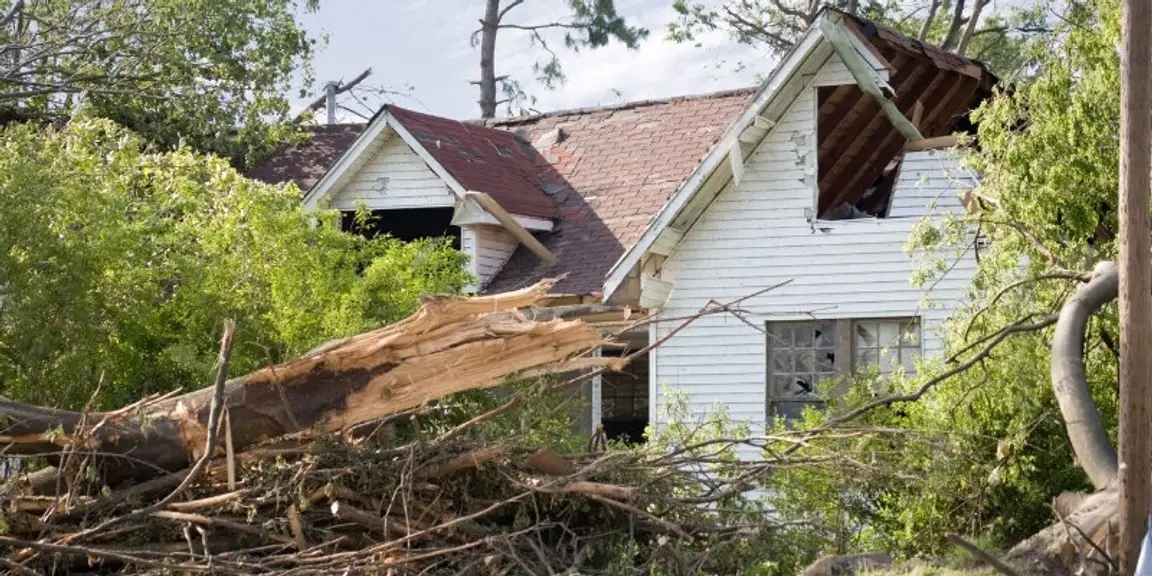

A blue tarp stays on a roof long enough that the neighbors quit noticing it. Some claims move that slowly. Meanwhile, the mortgage is still due on the first, and the adjuster stopped responding to emails two months ago. Then a buyer standing in your hallway asks why the bedroom ceiling looks like a coffee ring. I’ve bought plenty of houses in exactly that shape. Selling a house with an unresolved insurance claim is legal, and around here it’s common. Collecting your money afterward is where people get hurt. That part you can fix before you sign anything.
Can You Sell a House with an Open or Pending Insurance Claim?

Sellers walk into my office believing the claim must be finalized before the house can change hands. It doesn’t. A title company will close on a damaged property with a live claim file any day of the week, as long as the parties agree on who gets what. What derails these transactions isn’t the claim. It’s financing, and it’s silence.
Conventional lenders hate funding a house with unrepaired storm damage. An appraiser flags the ceiling stain, the underwriter orders a repair escrow or kills the loan, and your buyer walks. That’s why damaged homes so often end up with cash buyers. Plenty of the calls we get as a company that buys houses in Pinellas Park, FL, start with a loan that died at the appraisal.
Timing matters too. Redfin put Tampa homes at a median 46 days on market over the three months ending August 2026, up from 38 days a year earlier. Even a faster market would not rescue you if your buyer’s lender balks in week three and you have to start over.
A family in Brandon called me on a Tuesday a couple of years back, with an auction date set for the following month. Three payments behind, a hurricane claim stuck in limbo, and a garage so packed with furniture from the flooded back half of the house that nobody could park in it. We closed before the sale date, and they kept the claim in their own name.
Who Owns the Insurance Claim When You Sell Your Home?
Spell this out in the contract: who keeps the claim after the deed records.
Your homeowners’ policy isn’t attached to the house like a fence. It’s a contract between you and the carrier, and the right to collect for a loss that happened while you owned the property stays with you unless you hand it over. You’ll run into one of two structures nearly every time. You can assign the claim benefits to the buyer, usually in exchange for a higher price. Or you keep the claim, cut the sale price by the cost of the unrepaired damage, and collect the check yourself later.
Both work. Neither works if it lives in a text message.
Include it in the purchase contract, with the claim number. Name who’s entitled to future payments, including any supplemental payments the carrier issues months down the road. Then send a written copy to your adjuster so the carrier’s file shows where the checks go.
A check can show up weeks after closing, and that’s normal. I’ve had sellers get a supplement long after they handed over the keys, and it went smoothly because the paperwork left nothing to argue about. When we buy a house with an unresolved insurance claim at Revival Homebuyer, claim ownership goes in the contract itself, rather than a side agreement nobody can find later.
What Must Sellers Disclose About Open Insurance Claims in Florida?
I used to believe seller disclosure only covered what a buyer could see, smell, or trip over.
Wrong. Florida sellers carry an affirmative duty to disclose known conditions that materially affect value and aren’t readily observable to a buyer. That rule comes from case law, Johnson v. Davis in 1985, rather than one tidy statute. A pending claim for water intrusion, a patched roof leak, and a mold remediation someone started and abandoned: all of it belongs on the form. Selling as-is doesn’t excuse you from any of it, which catches people off guard. I’ve watched sellers skip this and regret it. Nolo’s summary of Florida disclosure law walks through how the statutory items sit alongside that general duty.
Sinkholes come with a rule of their own. Under Florida Statute § 627.7073(2)(c), a seller whose sinkhole claim was paid has to tell the buyer before closing that it was paid, and whether the full amount went into repairs.
Flood history triggers its own separate form, too. Florida Statute § 689.302 requires you to hand the buyer a flood disclosure at or before the contract is signed. It covers flooding that damaged the property while you owned it, any flood insurance claims you filed, and any assistance you got toward the repairs. That last item used to mean only federal help. Since October 2025, it covers assistance from any source.
Sellers cost themselves money right here: they disclose the damage and never document the discount. If you’re cutting the price because the roof isn’t fixed, write the amount of the reduction and the reason in the disclosure and the contract. That record protects you twice. It proves the buyer knew and pinpoints what the repair was worth if anyone later disputes the claim.
How Does an Open Claim Affect Your Mortgage Escrow and Payout?
Your lender’s name is printed on that claim check next to yours, and there’s nothing you can do about it.
Mortgage servicers sit on the policy as loss payees, so most claim checks above a small threshold arrive made out to both of you. The servicer endorses it, parks the money in a loss draft account, then releases it in stages as inspectors verify the repairs got done. I’ve watched that inspection step drag on for weeks. Homeowners who never repair often watch the money sit for months.
Now sell the house while the funds are still parked in that account. What happens to the balance? That depends on your servicer’s loss draft rules and your payoff. Some servicers apply unused funds to the loan payoff. Others return the balance once the lien is satisfied. Make the phone call before you accept an offer, not after.
Ask for the loss draft department by name. General customer service reps rarely know these rules.
One pattern I keep running into: a seller behind on payments finds out the servicer applied claim money to the arrears. That isn’t theft, and it’s usually buried in the mortgage documents. If you’re delinquent and holding claim proceeds, sort out the accounting before closing so your net sheet isn’t a surprise on signing day.
Does Home Insurance Pay Cash Value or Replacement Cost?
“They already sent a check, so the claim’s done.” In many cases, that’s not even close.
Florida law spells out how dwelling payments work under a replacement cost policy. Florida Statute 627.7011 tells the insurer to pay at least the actual cash value of the loss up front, minus your deductible. The rest comes as repair work is performed and costs are incurred. Total loss of a dwelling is different, and there the statute requires replacement-cost coverage to be paid with no depreciation held back.
That first check is depreciated. The rest, often called recoverable depreciation, only reaches you if repairs are actually made and receipts are returned to the carrier.
So a seller who takes the initial payment and sells as-is usually forfeits the recoverable portion. Is that a disaster? Not always, and I’ll take a position most adjusters won’t. Chasing the full replacement cost makes sense when you have the cash, the contractor, and six months of patience. With none of those, the depreciated check plus a quick sale usually nets more than a half-finished repair and a stalled listing.
Read your declarations page before you decide. Plenty of Florida sellers carry actual cash value roof coverage without knowing it, and that changes the math completely.
Are Insurance Claim Proceeds Taxable After a Home Sale?
Claim money isn’t income in the ordinary sense, but that’s not the same as tax-free.
Your basis in the damaged property decides whether you owe anything here. When proceeds exceed your adjusted basis, the IRS treats the excess as a gain from what it calls an involuntary conversion, as explained on the agency’s own involuntary conversions page for real estate. Most homeowners never get there, because their basis sits well above what a carrier pays for a roof or a water loss.
Long-time owners of appreciated property are a different story. Somebody who bought in the 1990s and took a large payout on a severely damaged home can end up with a real gain on paper.
You’ve got two ways out of it here. Section 1033 allows you to defer the gain by investing the proceeds in replacement property within the allowed period. The primary residence exclusion can also apply, and the IRS hurricane victims’ sale-of-home guidance illustrates how destruction and a subsequent sale can count as a single transaction for that exclusion.
None of that replaces a CPA who sees your actual numbers. Spend a couple of hundred dollars. Sellers who skip that step are the ones who get a letter the following spring.
How Can Buyers Avoid Inheriting Someone Else’s Insurance Claim?
A seller once handed me a folder containing three roofing estimates, two adjuster business cards, and no claim number anywhere. He didn’t know whether his claim was open, closed, or denied.
Buyers protect themselves by making claim status a written condition rather than a conversation. Ask for the claim number, the adjuster’s contact information, the scope of loss, and copies of all payments already issued. A carrier will confirm basic status to its own policyholder, so have your seller put it in writing during the inspection period.
Prior claims follow a property in a practical sense even when they don’t follow it legally. Loss history reports shape the next policy’s cost and whether a carrier will write it at all. In a state where premiums already strain buyers, I’ve seen that outweigh a cosmetic credit at closing.
Permits deserve the same scrutiny. Repairs done with claim money and no closed permit become a code problem for whoever holds title next.
Prepared buyers have an edge across the state right now. Florida Realtors reported that in August 2026, the median price for condos and townhouses climbed nearly 3% to just under $298,000, even as closed sales slipped, with tighter inventory holding prices up. Fewer choices mean less room to walk away from a place you already love, so do the claim homework early.
A Few Final Notes on Changes That Trip Sellers Up

Before: a seller cancels her policy the day she signs a contract, hoping to save two months of premium. After: a pipe fails during the inspection period, and she’s uninsured on a house she still owns.
Keep coverage in force until the deed records. Every time. Cancel early, and you’re exposed to the existing loss and to anything new.
Tell your carrier you’re selling. Some policies restrict coverage on vacant homes, and an empty property with an open insurance claim is a combination that adjusters treat with suspicion. A short written notice keeps your file clean.
Watch the paper trail on supplements. If the contract says you keep the claim, the carrier still needs current mailing information to send the check somewhere you’ll actually get it.
Statewide, Redfin recorded a median of 73 days on market for Florida homes in August 2026. Damaged houses sit longer than that, and the holding costs pile up quietly the whole time: premiums, taxes, utilities, lawn service. Sellers who call our cash house buyers in Orlando, FL, describe the same slow bleed.
An heir in Port Richey called me in the middle of splitting assets in a divorce. She’d inherited a half-repaired house with a screened pool full of leaves and an open window claim. Top dollar wasn’t what she was after; she wanted one closing date and no more contractor phone calls. We took it as-is on a Saturday afternoon. She kept the claim proceeds she’d already received, and the remaining supplement went to her because the contract said so. Three weeks later, she was done.
That’s the trade. You give up some of the price; you keep your weekends.
Frequently Asked Questions
Can I sell a house in Florida with an open insurance claim?
Yes. Nothing in Florida law stops you from selling a property while a claim is pending. What matters is how the contract handles claim proceeds, whether your lender has a say, and whether the buyer’s financing survives the house’s condition. Cash buyers remove two of those three problems.
Who gets the insurance money, me or the buyer?
Whoever the contract says. Stay silent on it and you invite a fight at closing. Spell out who receives issued payments, who receives future supplements, and who handles any repairs the carrier has already funded but that nobody has completed.
Does my mortgage company have to sign off?
If your loan balance is outstanding and the claim check names the lender, yes. Lenders endorse claim checks and often release funds in stages tied to repair progress. Loop your servicer in before you sign a contract, not after.
Do I have to disclose the claim to a buyer?
Disclose it. Florida sellers owe buyers known material facts affecting value, and an open claim qualifies. Written disclosure early costs you nothing and protects you from a post-closing complaint that costs plenty.
Will an as-is cash sale close faster than a repair-then-list approach?
Usually by months. Repairs mean contractor scheduling, permit inspections, and relisting to whatever the market looks like when you finish. A direct sale skips the middle entirely and gives you a firm date to plan around.
What if the claim is denied while the house is under contract?
Handle it in the contract in advance. A denial changes the math for a buyer expecting proceeds, so either price the offer without assuming a payout or include language covering what happens if the carrier says no.
If you’re sitting on a damaged property with an insurance claim still working its way through a carrier, you don’t have to sort it out alone before you make a decision. Contact us whenever you’re ready, tell us what the house looks like and where the claim stands, and we’ll give you a straight answer about what a cash offer would look like: no pressure, no obligation, and no problem if you decide to wait.
Helpful Florida Blog Articles