![Can You Sell a Home With a Mortgage [market_city]](https://image-cdn.carrot.com/eyJidWNrZXQiOiJwcm9kdWN0aW9uLmNhcnJvdC11cGxvYWRzLm9uY2Fycm90LmNvbSIsImtleSI6InVwbG9hZHMvc2l0ZXMvNDE2NDUvMjAyNi8wNC9DYW4tWW91LVNlbGwtYS1Ib21lLVdpdGgtYS1Nb3J0Z2FnZS5wbmciLCJlZGl0cyI6eyJyZXNpemUiOnsid2lkdGgiOjExNTJ9LCJ0b0Zvcm1hdCI6IndlYnAiLCJ3ZWJwIjp7InF1YWxpdHkiOjcwfX19)

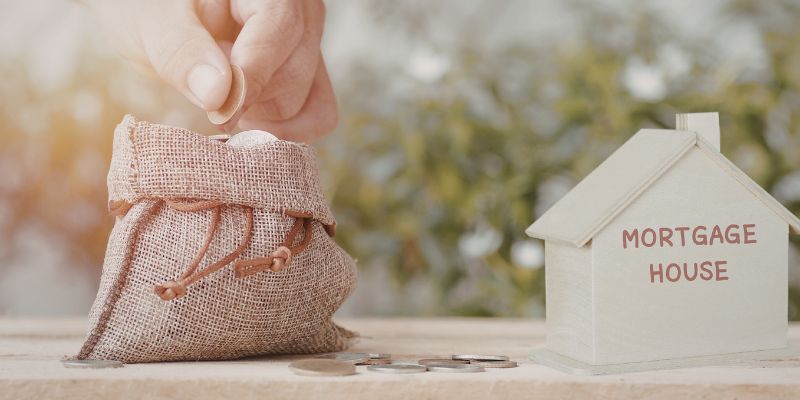
Three in four Americans choose to go with financing to fund their home purchase. For first-time home buyers, this number increases even more to about 91%. These figures are hardly surprising, especially in Florida, where the median home price is six times the household income. So, unless you’re born into wealth, buying your own home without depending on banks or mortgage companies is next to impossible.
After the purchase, homeowners usually live in it for about eight years before deciding to sell and move into a bigger and better house that is better suited to their needs. And, since this property is likely financed, typically in 15- to 30-year terms, there’s a good chance that there’s still a mortgage attached to it.
In this article, Revival Homebuyer can help walk you through the process of selling a house with a mortgage in Florida and ensure that it is financially satisfying, discuss the various considerations when selling with a mortgage, and provide everything you must know before initiating the process.
Is it possible to sell a home with an existing mortgage?
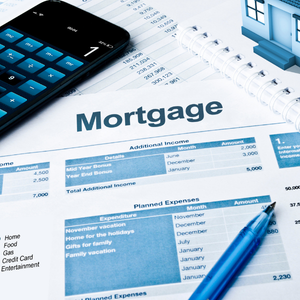
Yes, you can sell your house even if you still owe money on it. While an existing mortgage is considered an encumbrance, it does not prevent you from selling your property.
If you had other liens or legal claims on the property, such as those due to unpaid renovation work (mechanic’s lien) or delinquent property taxes (tax lien), it would be a different story. Mortgage liens, on the other hand, are so common that they aren’t even considered a cloud on the title. It is also easy to resolve since a home loan generally has a due-on-sale clause, which triggers the payoff for the full mortgage balance as soon as the property is sold, making it impossible for the borrower to make off with the proceeds.
Steps in Selling a House with a Mortgage
Assess Your Financial Situation
Before anything else, you must take stock of your financial situation. You don’t want to sell your home and end up just breaking even, or worse, lose money, after all the effort that you’ll be putting in.
Request a Mortgage Payoff Statement
The first step is to reach out to your lender and ask for a payoff statement. This document, which is also known as a settlement statement or a payoff quote, provides details on how much you need to completely pay off your mortgage. In addition to the payoff amount, it also outlines how much equity you have, how much interest you owe, and other fees that your lender may charge, such as an early payment penalty.
The payoff quote is updated every time you make a payment, so before closing on the sale, make sure to get the most up-to-date statement from your lender.
Calculate Your Equity
Equity is the difference between your home’s market value and how much you currently owe on it. Making regular mortgage payments is how you normally build up equity, although you can consider doing upgrades that increase your home value, such as finishing the basement (up to a $50,000 equity boost) or replacing your garage door (can add up to $10,000 to the sale price).
Familiarize Yourself with the Payoff Process
Before signing on the dotted line at closing, review the mortgage payoff quote. Check whether you’ll have enough equity to cover your mortgage, closing costs, lender fees, and realtor commissions, and then have enough remaining for moving expenses and a down payment for your new place.
Set a Competitive Asking Price
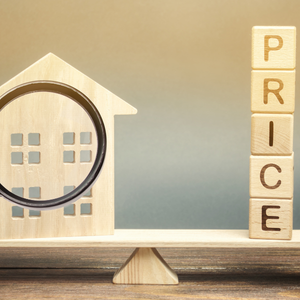
Now that you’re certain that you’ll have enough equity to cover the sale and all its associated costs, it’s time to set your asking price. You don’t want to price it too high so that buyers are automatically turned away, nor do you want to price it too low so that you miss out on profits.
What you need is a competitive asking price that would get potential buyers through the door to check out your property; show them your home’s features, such as an upgraded kitchen, an open floor plan, remodeled bathrooms, and the like.
Free Option: Look at “Comps”
To establish your price, you’ll have to do some literal legwork to look at comparables, or “comps.” These are neighboring properties that are up for sale that are similar to yours in size and features. It would follow that your house would be priced around the same. Walk around your Florida neighborhood, be on the lookout for the ones with ‘For Sale’ signs on the front lawn, and maybe go inside and have a chat with the owner or the realtor.
Alternatively, you can look up your comps online by visiting real estate websites and checking out their listings.
Paid Option: Hire an Appraiser
If you don’t have the time to do the research yourself, you can get a professional to do it. An appraiser can give you a formal estimate of your home’s value for a few hundred dollars. While it is an upfront and out-of-pocket investment, an appraisal can give you the best chance at setting a fair and competitive listing price. This is because an appraiser takes into account the real-time local market trends, your home’s location and condition, features and amenities, lot size, and a whole host of other factors for a complete and comprehensive valuation.
Choose: Sell through a real estate agent, FSBO, or find a cash buyer?
By now, you’re feeling pretty confident that you have set a market-friendly price, which will enable you to pay your balance in full while still leaving you with enough cash for a fresh start, and it’s finally time to put your house on the market. So how are you going to do it?
Sell With a Realtor
According to the National Association of Realtors (NAR), 9 out of 10 home sellers sold their properties with a real estate agent in 2025. And this is for good reason, as realtors provide professional guidance from start to finish. You won’t even have to worry about setting your asking price. Good real estate agents have their pulse on the local market, enabling them to price your Florida home correctly. Additionally, they have some great suggestions before showing the house to your prospective buyers, such as
- Arranging a home inspection: your real estate agent doesn’t want to be caught flat-footed with eagle-eyed buyers, and neither should you. An inspection will uncover hidden issues and give you time to correct them. And since your buyer is most likely dependent on financing, they’ll require an inspection anyway, so it’s better if you fix it ahead of time.
- Fix anything that’s broken: sometimes it can be as simple as replacing busted light bulbs, upgrading cabinet handles, or fixing leaky faucets. In the worst cases, however, it could be as serious as a mold problem that needs remediation, requiring you to shell out thousands. If you don’t have the funds for the required repairs, you can borrow against the equity of your mortgaged home. It will be included in the payoff amount once the sale is finalized.
When selling with an agent, that’s about as far as your pre-sale responsibilities go. You don’t have to worry about anything else except for evaluating offers, but your agent can do that for you as well. They will be the ones to deal with the staging and the showings, as well as other third parties such as escrow and title companies, real estate lawyers, and your buyer’s agent.
Sounds sweet, right? What’s the catch?
The catch is that real estate experts don’t work for free. In Florida, the average realtor takes off 5.57% of your home’s sale price, so for a median home price of $425,000, the commission is a staggering $24,000!
Sell via FSBO
Commissions eat up a huge chunk of what you could have made from the sale, and you’re wondering if there’s a way to keep that for yourself instead.
You can consider taking the reins on your home sale by going the For Sale By Owner (FSBO) route! Do note that having full control over the process means you have full responsibility over it as well. This means you have to decide on everything: how much you’d sell it for, what improvements you’d make or skip (if selling as is), when to do the showings, and ultimately, who you’d sell it to.
But there are downsides to this. Since you’re primarily a homeowner, and being a home seller is not your profession by any means, FSBO can come with a steep learning curve, such as
- Determining your asking price: Pricing it correctly will get the most eyes on your property and the most cash in your pocket (or bank account) after everything is over and done with
- Navigating seller disclosures: It can be fraught with legal landmines, especially if you miss disclosing an issue, regardless of whether it’s intentional or not
- Figuring out a marketing strategy: Do you just stick a ‘For Sale’ sign out front and hope buyers come knocking?
- Hosting open houses: It’s good if you’re a natural salesperson, but if not, playing the gracious and charismatic host on top of being a knowledgeable salesperson can be overwhelming
- Negotiating: It would be rare to find a buyer who wouldn’t so much as ask for a discount or some seller concessions. If you can’t hold your own at the negotiating table, you might end up giving away more than what you’re prepared to
Aside from all the things that you have to learn, you’re still on the hook for paying realtor fees if you happen to sell to an agent-represented buyer, that is. The fee constitutes around 3% of the final sale price, and this is on top of the closing costs, which include title search fees, title insurance, and escrow fees.
Furthermore, selling solo nets you only about 80% of the selling price if you had gone with an agent. That said, whether you make more money or not largely depends on your negotiation skills.
Sell to a Cash Buyer
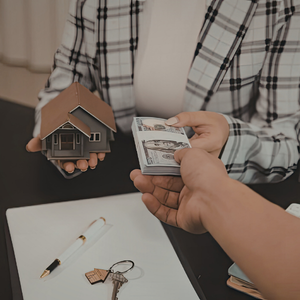
But what if you want the best of the two options above, where you don’t pay a cent in commissions, and you also don’t need to deal with the hassles of going at it alone? There’s a third option: selling to a cash buyer.
With a cash buyer, you don’t have to do any prep work prior to the sale.
Repairs? Forget it.
Inspection? There’s no need.
All you have to do is pack up your stuff as soon as the sale is finalized and let the buyer deal with everything else. This is because cash buyers are usually real estate investors, house flippers, and wholesale buyers who’ll be renovating your home to flip or transform it into a rental anyway, so there’s no need to do any of the repairs or upgrades yourself.
The tradeoff? Expect to sell below market value. That said, selling to a cash buyer is fast and straightforward, especially with cash home buyers in Florida, so with the time and effort saved, it usually is more cost-efficient.
Try these strategies to get the Best offers
When selling your Florida property with an unpaid loan, you need to get the best offer that will be enough to cover closing costs and the loan itself so you walk away home-free (literally!).
Here are some marketing strategies that can help you towards your goal:
- Stage your home and upload photos on your social media (Instagram, Facebook, etc.)
- Create an informative and attractive listing to pique the buyer’s interest
- Doing a virtual open house, a DIY video walkthrough, after staging your house, of course, could do wonders in drumming up interest. Make sure you’re always on the phone and ready to field inquiries!
Review the Closing Costs Before Finalizing the Sale
After reviewing offers, you’re now heading to the closing table with the buyer. Their offer is more than enough to cover your remaining mortgage, so you’ll walk away with a substantial profit. However, that doesn’t mean you have to rush in signing the closing papers. Make sure the proceeds will be enough for the following:
- Paying off a home equity line of credit (HELOC) if you’d taken one out
- Selling expenses such as marketing costs
- Other outstanding liens
- Agent commissions (realtor, listing agent)
- Mortgage insurance on your new home, if your down payment is less than 20%
- Escrow and title insurance fees
In summary, expect to take out between 7 and 10% of your home’s selling price in closing costs. Any funds remaining after all these have been deducted will be your profit.
Frequently Asked Questions: Selling Property with an Outstanding Balance
Can you sell the property soon after buying it (aka flipping)?
Yes, there’s nothing preventing you from selling your property even if you just closed on it yesterday. Is it wise? Probably not.
Even if you paid upfront in cash and did some high ROI improvements so it’s now going for double what you got it for, it’s not a good decision from a financial perspective. This is because of a little thing called a capital gains tax, and it is imposed on your home sale profit. After commissions, selling costs, and the tax on your capital gains, you may find that the sale isn’t profitable after all.
To keep the IRS from getting its hands on your profits, you can choose to sell your house after two years, once the tax exclusion kicks in.
Can you sell property that’s underwater?
An underwater property means that you owe more than it’s worth. Simply put, even if you sell it now at market price, it wouldn’t completely pay off your mortgage. You have 3 options in this case:
- Wait for the market to improve: in a buyer’s market, there is an oversupply of properties and not enough demand, resulting in a steep drop in home prices. You can do nothing in the meantime while waiting for the market reversal before proceeding. During the wait, it’s also possible for your property to appreciate as well, especially if the county has development plans in the pipeline.
- Check if you’re eligible for a relief refinance: your mortgage lender generally doesn’t allow refinancing unless you’ve built up 20% equity. If you’re underwater, you have negative equity. In this case, check if you qualify for the government’s mortgage relief grants. As long as you’ve been consistent in paying your mortgage for the last 6 months, this can be your way out.
- Do a short sale: When you sell short in order to pay your loan balance, you’re essentially asking your lender to accept less than what they are owed. Thus, you have to obtain their permission before doing a short sale. You might be required to provide proof of financial hardship, alongside an offer from a serious buyer. Keep in mind that a short sale only results in a mortgage payoff. You literally walk away with zero cash from the transaction.
Can you sell your mortgaged house and buy a new one at the same time?
Yes, you can absolutely sell your home and buy a new one at the same time, a practice that is common in Florida. All you have to do is coordinate the sale and purchase so that the funds will be immediately available for the next step. Here are some ways to do this:
- Bridge Loan: You can secure a short-term loan against your current home, which will be your down payment for the new one. Once your home is sold, this will be paid off at the same time as your mortgage.
- Coordinate same-day closing: You can finalize the sale of your home in the morning and then close on your new house in the afternoon.
- Contingent offer: Make your new purchase contingent on the sale of your home so that you won’t have to scramble for funds if the deal on your current house falls through. Do note that sellers are more amenable to this in a buyer’s market, when there aren’t a lot of buyers competing for the property.
- Home Equity Line of Credit (HELOC): If you’ve built up substantial equity, you can make use of a HELOC as funds for your purchase. However, time it properly or reach out to your lender, because some companies no longer allow this after your property has been listed for sale
Closing Thoughts: Selling Your Mortgaged Florida Home
It may have a lot of moving parts and things to consider, but selling a Florida home that still has a mortgage is entirely possible. If you want everything to be simple and straightforward, We Buy Houses in Florida is here to help. We’re committed to helping homeowners like you find quick and easy solutions to real estate problems. Fill in our form below with your address, phone number, and email to get our free cash offer, no strings attached, no obligation whatsoever. Once you accept, choose the date of your closing, and you’ll get everything that’s on offer!
If you have questions, feel free to reach out to us at (813) 548-3674. We’d love to walk you through our process. You can also connect with cash home buyers in Tampa, FL, and nearby cities to explore your options.
Helpful Florida Blog Articles
- How Long Does It Take to Force a Sale of Property in Florida
- Selling A House That Needs Repairs in Florida
- Can You Sell A House With A Mortgage In Florida
- How To Sell Your House Rent-to-Own In Florida
- Selling A House With Delinquent Property Taxes In Florida
- How To Stop Foreclosure in Florida
- How Much Do Realtors Charge to Sell a House in Florida
- Can I Sell My Parents’ House With Power Of Attorney?
- What Do I Have to Disclose When Selling a House?
- How to Sell a House with Mold in Florida
- Can Someone Sell My House Without Me Knowing in Florida
- Can a Seller Refuse Repairs After Inspection
- Selling Jointly Owned Property During Divorce
- Selling a House in a Trust After Death in Florida
- Selling A Home For A Loss In Florida