

A septic problem in a house you need to sell is not the combo anyone wants. The tank’s acting up or maybe an inspection just revealed some issues you didn’t know existed and now you’re stressed about how this affects your sale.
Well, septic problems don’t kill deals. They complicate things, sure, but homeowners sell houses with wonky septic systems all the time in Florida. Some people fix the issues before listing, while others drop the price and sell as-is.
This guide looks into your actual options so you can choose the path that makes sense for your situation.
Usual Septic Problems in Riverview Properties
Most septic tanks give you about 20 to 40 years before they start falling apart. Florida’s sandy soil and constant rain don’t help. Riverview properties face specific issues due to our lovely subtropical weather and aggressive plant life.
Drain Field Failure
Your drain field is where treated wastewater goes after it leaves the tank.
When it fails, you get standing water in random spots on your lawn that never dry out, or worse, actual sewage bubbling up near the tank. The soil gets so waterlogged that it can’t absorb any more water.
This usually happens when tanks aren’t pumped often enough, and too many solids clog everything.
Fixing it costs anywhere from $2,000 to $20,000, depending on how bad the problem is and what your soil looks like.
Septic Tank Cracks or Leaks
Concrete tanks crack as they age because Florida’s ground shifts with weather changes and the water table rises and falls.
You might see one patch of grass that’s suspiciously greener than the rest or smell something funky near the tank. You’ll also notice your drains acting slowly.
Minor crack repairs cost $500 to $3,000. If the damage is severe, you’re looking at full replacement costs between $3,000 and $10,000.
Tree Root Infiltration
Trees love septic systems because there’s constant moisture and nutrients down there. Those oaks, willows, and palms send their roots straight for your pipes like they’ve got a homing signal.
Once roots get in through tiny cracks, they grow bigger and block everything.
You’ll get frequent backups and weird gurgling sounds when you flush. Clearing roots costs $500 to $1,500, but they grow back unless you deal with the actual trees or install barriers. This can push total costs up to $5,000.
System Overload Issues
Your septic system was sized based on the number of bedrooms you had when it was installed. If you add a bedroom later or use way more water than the previous owners did, the system won’t be able to keep up.
You’ll see backups in multiple drains at once. The toilet backs up while you’re doing laundry and the sinks drain slowly everywhere.
Managing your water use helps temporarily, but if the tank’s genuinely too small, you need a bigger one. That replacement costs $3,600 to $12,500 in Riverview.
What’s a Professional Septic Inspection

A licensed inspector comes out and tells you exactly what’s broken and what it costs to fix. They spend two to three hours poking around your system and charge $300 to $600 in Riverview.
They locate your tank using equipment or by flushing a transmitter down your toilet and digging up the access ports. They measure how much sludge has built up inside with a pole called a Sludge Judge.
Then they check for cracks and examine the baffles. They also inspect your drain field for soggy spots or standing water and sometimes run a camera through the pipes to spot root damage or clogs.
You get a written report with repair estimates to show buyers.
Can You Sell a House With Septic Tank Problems in Riverview, FL?
Yes, you can sell a house with septic tank problems in Riverview, Florida. The state doesn’t have a blanket law that says you can’t sell a house with a busted septic system. Some states do, but Florida isn’t one of them.
That said, you have to disclose the problem. Florida law requires sellers to disclose any major issues affecting the property’s value or safety to buyers. A failing septic system definitely qualifies.
You can’t just sell your house and pray nobody notices the soggy yard or the slow drains.
Important Note: Your septic issue will limit your buyer pool and affect your price. Some buyers will walk away the second they hear septic problems. Others, especially investors and cash buyers, actually look for houses like yours because they can handle repairs and still make money on the deal.
How to Sell a House With Septic Issues in Riverview, FL
There are three main options when selling a house with septic issues in Riverview, Florida. Some people have the cash and time to fix everything before listing. But others need out and can’t afford to dump thousands into repairs first.
Option 1: Repair Your Septic System Before Selling
Fixing your septic issues before you list gets you the widest buyer pool and the best price. Most people want a house they can move into without having to deal with sewage problems right away. Makes sense.
The downside is you’re spending money upfront that you might not have and repairs take time.
You could be looking at weeks of contractors, permits, and yard work before you can even put up a for-sale sign.
Typical Septic Repairs and Costs
Most common repairs in Riverview fall somewhere between $500 and $5,000.
Pumping and cleaning your tank costs $200 to $1,200, depending on the tank’s size. Replacing a baffle costs $250 to $900. Fixing damaged pipes costs $600 to $5,000.
If roots invaded your system, you’re looking at $500 to $1,500 to clear them out, plus whatever it costs to fix the damage they caused. Drain field repairs are pricier. It costs between $2,000 and $20,000 if you need extensive work.
The actual cost depends on how much of the field failed and on your property’s soil conditions.
Benefits of Fixing Issues First
You sell faster when the septic works. Buyers don’t have to worry about repair costs or dealing with contractors after they move in.
Their lenders approve mortgages more easily because there’s no major system failure hanging over the deal.
You also get more money for your house. A working septic system means you can price at market value instead of taking a discount for the problems. Plus, you avoid those awkward negotiations where buyers try to knock even more off the price once they see the inspection report.
Option 2: Replace the Entire Septic Tank System
Sometimes repairs aren’t enough. That is, if the tank’s too old or too small for the house. Your inspector might tell you flat out that patching things up is just throwing money at a system that’s going to fail again in a year or two.
Full replacement costs a lot of money, but it also means the next owner gets a brand new system with decades of life left.
That’s a huge selling point if you can afford to front the cash.
When Replacement Is Necessary
You need a new system when the tank has major structural damage that can’t be fixed. For example, there are cracks all over the place, chunks of concrete falling apart, or a tank that’s shifted and broken the connecting pipes, all of which mean replacement time.
Drain field failure usually requires a new field in a different part of your yard, since the old soil is contaminated and no longer usable.
And if your system is super undersized for your house (like a two-bedroom tank serving a four-bedroom home), you need a bigger setup that meets current code.
Replacement Costs in Riverview
A full septic system replacement in Riverview costs $3,600 to $12,500 on average. The tank itself costs $500 to $2,500. Permits cost $450 to $2,300. Labor costs $1,500 to $4,000 and excavation plus land prep adds another $1,500 to $6,300.
Your actual price depends on tank size and how easily heavy equipment can access your property. It also matters what the soil conditions look like.
Sandy soil costs less to excavate than clay or rocky ground. On the other hand, a flat yard is cheaper to work on than a sloped one.
Option 3: Selling Your House As-Is With Septic Problems
You can also tell buyers upfront about the septic issue and then you drop your price. You sell to someone who doesn’t mind dealing with repairs themselves.
This way, you can save yourself the stress of managing contractors and waiting for permits. But you’re also giving up money and dealing with a smaller group of interested buyers.
Most traditional buyers can’t even get mortgage approval on a house with a busted septic system, which really limits who can buy your place.
Pricing Your Property Correctly
You need to knock off more than just the repair costs. Most buyers want the full repair estimate covered, plus extra, because now they have to deal with all the contractor nonsense after they move in.
You should definitely get those repair quotes first, so you actually know what you’re working with. Check what similar Riverview houses sold for recently and subtract your repair costs as a starting point.
You’ll probably need to go lower to get anyone interested, especially if the repairs are expensive or complicated.
Marketing to the Right Buyers
You should prioritize marketing to buyers and investors. They buy problem properties all day long and have the funds to handle repairs without stressing about mortgage approvals.
Moreover, flippers want houses they can fix and resell and landlords want rental properties they can get at a discount. Your broken septic system is exactly what they’re looking for because it scares off regular buyers and creates a negotiation advantage.
If you are going the traditional route, go for an agent who works with investors regularly so you can sell faster than listing to the general market.
How Septic Tank Issues Affect Your Home’s Market Value
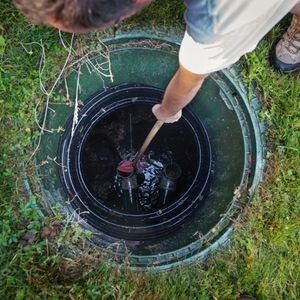
Your house is worth less with a broken septic system. That’s just how it is. It depends on the repair costs; much lower the value, is. The price is also adjusted based on how scared buyers are of septic problems in general.
A $3,000 repair might cost you $5,000 to $7,000 in value because buyers want coverage for their hassle, not just the actual repair bill.
A $10,000 replacement could drop your value by $15,000 or $20,000 because buyers know that’s major construction with equipment tearing up the yard and weeks of chaos.
our local market also affects your property’s value. If Riverview houses are selling fast and inventory is low, you might get away with a smaller discount. The same applies in nearby markets — homeowners looking to sell your house fast for cash in Lakeland often see similar pricing adjustments when major repair issues are involved.
If things are slow and buyers have a lot of options, they’ll push harder for a better deal on your septic headache.
Financing Challenges for Buyers
Most mortgage lenders don’t like a house with a failed septic system and who can blame them? They see it as a health hazard and a liability, which means your buyer pool instantly shrinks to people who can pay cash or find alternative financing.
FHA and VA loans almost always get rejected when there’s a septic problem. Conventional loans depend on the lender, but most won’t approve until the system passes inspection.
That leaves you waiting for buyers who either have cash on hand or can secure creative financing.
Some lenders offer repair escrow programs, in which they hold back funds at closing to cover septic repairs. The buyer gets the loan and you get paid. The repair funds remain in escrow until the work is completed.
It sounds great in theory, but not every lender offers this option. The ones that do have strict requirements about repair timelines and contractor qualifications.
Your best option for a smooth sale is finding a cash buyer who doesn’t care about mortgage approval. They can close in days or weeks instead of months. There will be no underwriters and appraisers harassing you for your septic situation.
Negotiating With Buyers on Septic Repairs
Buyers will ask for concessions once they learn about the septic problems. That’s guaranteed. You need to handle these negotiations well because they will affect how much money you walk away with and whether the deal actually closes.
Come to the table with repair estimates already in hand. There should be hard numbers from licensed contractors for buyers to trust you. That’s better than your best guess about what things might cost.
Having documentation shows you’re being straight with them and not hiding anything.
Offering Repair Credits at Closing
A repair credit means you reduce the sale price by the cost of repairs, so the buyer can handle the work after they own the house. This is cleaner than you trying to coordinate contractors while also dealing with a home sale.
Let’s say repairs cost $4,500. You agree to drop your price by $5,000 to cover the repair, plus a little extra for their trouble. The buyer closes and moves in. They hire whoever they want to fix the septic system. You’re done and out.
The downside is that buyers usually want more than the actual repair cost as a credit. They’re taking on the project, the risk of cost overruns and the hassle of managing it all.
You should expect them to ask for 120% to 150% of the estimated repair costs, especially if the work is complicated or could uncover additional problems. Situations like this often raise legal questions, including Can You Evict a Tenant If You Sell Your House in Florida?, which can directly impact your timeline and negotiating power.
Escrow Holdback Options
An escrow holdback means part of your proceeds from the sale gets held in escrow until repairs are complete. The buyer gets the house and you get most of your money.
The repair funds are released once a licensed contractor finishes the work and the system passes inspection.
This option works when the buyer needs a mortgage and their lender requires the septic system to be fixed within a certain timeframe after closing. You agree to complete the repairs using escrowed funds, which satisfies the lender’s requirements and keeps the deal moving.
Lenders typically hold back 1.5 times the estimated repair cost to cover potential overruns. So a $6,000 repair means $9,000 sits in escrow. You get that money back once the work is done, minus actual repair costs.
Just know that you’re still liable for managing contractors and getting the work done even after you’ve sold the house. This can be super difficult if you’ve already moved.
Timeline for Selling a House With Septic Problems
Selling with septic issues takes longer than a normal sale. Here’s what you’re actually looking at:
| Selling Approach | Repair Timeline | Listing to Close | Total Timeline |
| Repair before listing | 2 to 6 weeks for work plus permit wait time | 30 to 60 days in a decent market | 2 to 4 months |
| Sell as-is | None | 2 to 6 months (waiting for cash buyer or investor) | 2 to 6 months |
| Full replacement before listing | 1 to 3 months for septic work | 30 to 60 days in a decent market | 4 to 5 months |
Florida permits can drag on if your county’s backed up. Good contractors book out weeks in advance. Weather delays also happen and inspections take time. Add all that buffer into your planning because septic work rarely goes faster than estimated.
Alternative Solutions to Full Replacement
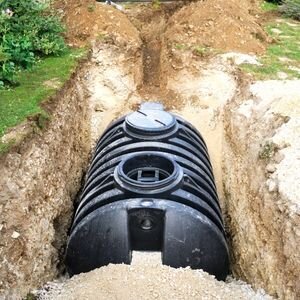
There are other options besides expensive replacement or selling a broken system. These options don’t work for every situation, but they’re worth checking out before you commit to a full replacement.
Aerobic Treatment Systems
These cost more upfront than traditional septic tanks but work better in problem soil conditions.
They treat wastewater more thoroughly and can handle smaller drain fields. This helps if your property doesn’t have room for a full conventional system.
Installation costs $10,000 to $20,000, but it might be cheaper than installing a conventional drain field on difficult property.
Mound Systems
These build the drain field above ground when your soil won’t percolate, or the water table is too high for a traditional buried system. They look like big lumps in your yard, which isn’t pretty, but they solve drainage problems that would otherwise require tearing up half your property.
The costs range from $15,000 to $25,000, depending on size and site conditions.
Municipal Sewer Connection
Some Riverview properties can connect to city sewer lines if the service extends to your area since your house was built. You decommission the septic tank and hook into the sewer system instead.
Connection fees cost anywhere from $3,000 to $20,000, depending on how far the nearest line is and what your city charges for hookups.
You should definitely check with Riverview’s utilities department to see if this option is available at your address.
Partial Repairs
Sometimes, you can fix just one part of the system; there’s no need for full replacement. Like if the drain field failed, but the tank is fine.
You replace only the field, leaving the existing tank, which significantly reduces costs. This is ideal if the tank still has useful life left and passes inspection on its own.
Septic System Warranties and Guarantees
Some septic companies offer warranties on repairs or new installations, which can be a selling point when you list your house. Buyers will feel way better about a septic system that comes with a warranty than one that could fail the day after they close.
Warranties typically cover parts and labor for 1 to 5 years, depending on the work performed. A new tank installation might come with a five-year warranty. Basic repairs usually last one to two years.
Always read the docs because some warranties only cover the tank itself and not the drain field or pipes.
Make sure any warranty paperwork is transferable to the next owner. Some companies require the new homeowner to register the warranty within 30 days of closing or it becomes void.
Give your buyer all the documentation and contact information so they can handle the transfer smoothly. Working with experienced cash home buyers in Riverview means you can skip repairs, inspections, and lender delays altogether.
Sell Your Home With Septic Issues to Cash Home Buyers in Riverview
Cash buyers don’t care about your septic problems the way traditional buyers do. They buy houses with failed systems all the time and have contractors ready to handle repairs the day after closing.
They don’t need mortgage approval, which means no lender will hesitate because of your broken tank.
If you’re wondering exactly how Revival Homebuyer buys homes, the process is straightforward and designed to eliminate inspections, repair requirements, and financing delays. You’re looking at 1 to 3 weeks from offer to closing, instead of months of waiting and hoping a traditional buyer’s financing goes through.
Here are some more reasons why cash buyers are a good fit for septic problems:
✓ They buy houses as-is with zero repairs required from you.
✓ They don’t need septic inspections or lender approvals.
✓ They close in 7 to 21 days regardless of system condition.
✓ They handle all repair costs and contractor coordination after purchase.
✓ They don’t renegotiate after seeing the septic report.
Key Takeaways: Selling a House With Septic Tank Problems in Riverview, FL
Selling a house with septic tank problems in Riverview doesn’t mean you’re stuck. You can repair the system before listing or replace it entirely. You can also sell as-is to buyers who handle the fixes themselves.
Each option has different costs as well as timelines. They also have a different buyer appeal. You need to choose the one that fits your budget and how fast you need to close.
If dealing with contractors, permits, and months of septic repairs is overwhelming, Revival Homebuyer buys houses in Riverview with septic problems as-is. Call (813) 548-3674 or fill out our quick contact us form to get a no-obligation cash offer on your house, regardless of septic condition.
Helpful Riverview Blog Articles